
Stress is no longer a seasonal visitor. For millions of people, it has become the baseline — a persistent hum of overwhelm that modern medicine addresses with management tools rather than root-cause resolution. Anxiety medications suppress the symptom. What they rarely address is the underlying imbalance in the nervous system that creates that symptom in the first place.
Ayurveda takes a different approach. For over 5,000 years, it has recognized stress not as a psychological failing but as a physiological disturbance — an aggravation of Vata dosha (the energy of movement and the nervous system) that, if left unaddressed, cascades into anxiety, insomnia, digestive collapse, hormonal disruption, and burnout.
At Bookmyveda, we work with people who have tried everything else. Many arrive on our platform after years of therapy, medication, and wellness experiments — only to discover that a few weeks of classical Ayurvedic treatment produced changes nothing else had. This guide explains how and why — and which treatments are right for which situations.
How Ayurveda Understands Stress and Anxiety
In Ayurvedic terms, chronic stress is primarily a Vata disorder. Vata governs movement — physical, neurological, and mental. When Vata becomes aggravated by overwork, irregular routines, overstimulation, poor sleep, or emotional trauma, the nervous system loses its capacity to return to equilibrium.
This isn't metaphor. Modern neuroscience increasingly confirms what Ayurveda observed millennia ago: chronic activation of the stress response — the HPA axis, the sympathetic nervous system — literally rewires the brain, dampens the vagus nerve, and disrupts the gut-brain axis. The body becomes physiologically incapable of switching off.
Charaka Samhita, one of Ayurveda's foundational texts, describes Prajnaparadha — the crime against wisdom — as the root cause of most disease. Living at odds with your nature creates accumulated stress that, over time, becomes pathology. Ayurvedic treatment doesn't just calm the surface; it repairs the terrain.
The Ayurvedic approach to stress and anxiety operates on three levels simultaneously: calming the aggravated dosha, removing accumulated toxins (ama) that interfere with neurological function, and rebuilding the body's capacity for sustained, natural calm — what Ayurveda calls ojas.
Recognizing Your Pattern
Not all stress and anxiety look the same. Ayurveda distinguishes between presentations by dosha:
- Racing thoughts, inability to switch off
- Insomnia — especially waking at 2–4am
- Physical restlessness, trembling
- Digestive irregularity, bloating, gas
- Fear, overwhelm, scattered focus
- Anger, irritability masking underlying fear
- Perfectionism and control-seeking
- Hyperacidity, acid reflux under stress
- Waking at 10pm–2am, unable to relax
- Competitive, driven — until collapse
- Depression, heaviness, withdrawal
- Oversleeping yet chronic fatigue
- Emotional eating, attachment and grief
- Congestion, sluggish digestion
- Resistance to change, stagnation
- Symptoms persisting beyond 3 months
- Sleep disruption affecting daily function
- Physical symptoms with no clear cause
- Anxiety interfering with work or relationships
- Prior treatments offering only partial relief
Shirodhara — The Oil Stream That Silences the Mind
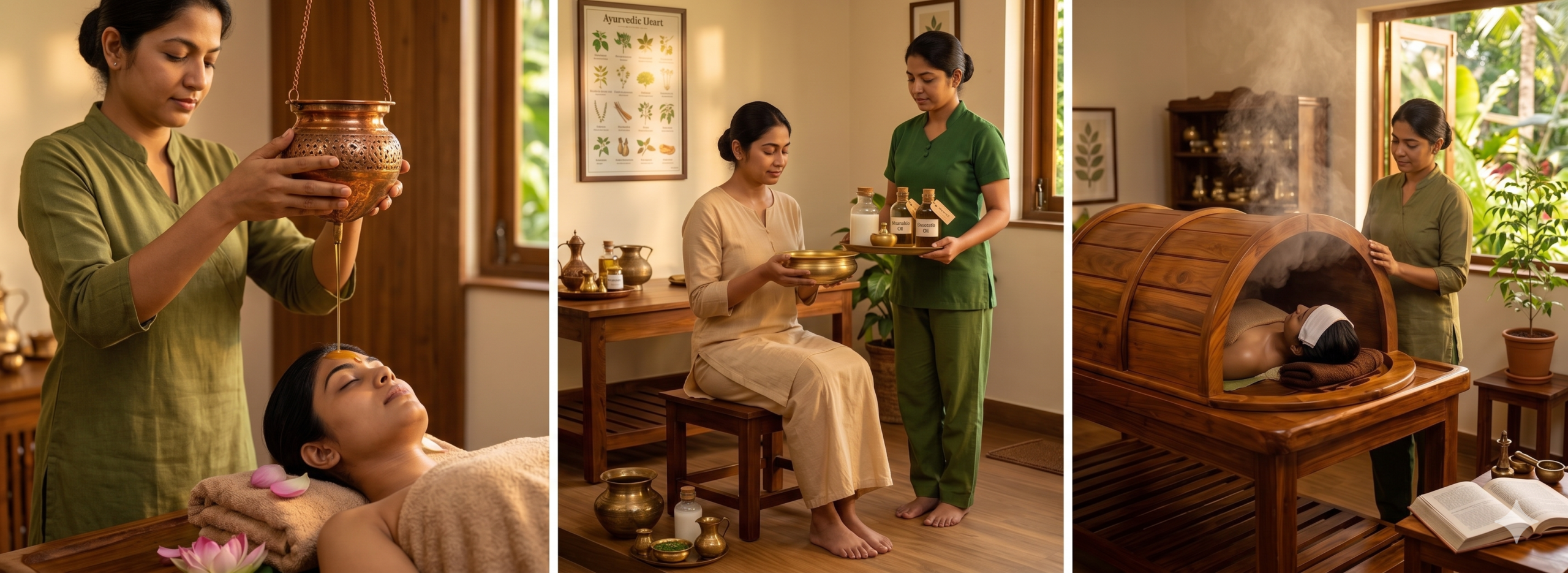
Among the many Ayurvedic therapies for stress and anxiety, Shirodhara is one of the most well-known and deeply calming treatments. The term comes from the Sanskrit words shiro (head) and dhara (flow or stream). In this therapy, a continuous stream of warm, medicated oil is gently poured over the forehead, particularly around the third-eye region (Ajna Chakra), for about 45–60 minutes. The soothing rhythmic flow helps relax the nervous system, calm the mind, and promote a deep sense of mental and emotional balance.
From an Ayurvedic perspective, Shirodhara is known for its deeply calming and relaxing effects on the mind and body. The gentle, continuous flow of warm medicated oil over the forehead helps promote a sense of mental clarity, relaxation, and emotional balance. Many people experience a peaceful meditative state during the therapy, making it a popular Ayurvedic treatment for managing stress, mental fatigue, and restlessness. The soothing nature of Shirodhara also supports overall wellbeing by encouraging deep relaxation and a refreshed state of mind.
What It Addresses
- Chronic anxiety and panic disorder — especially Vata-type racing thoughts
- Insomnia and disturbed sleep cycles; restores natural sleep architecture
- Post-traumatic stress and emotional exhaustion
- Hypertension and psychosomatic headaches
- Mental fatigue, brain fog, and burnout in high-performance individuals
- Depression with anxious features; grief and emotional numbness
- Pre- and post-menopausal mood disturbance
Most people experience a profound quiet during the first session — many describe it as the first time in years their mind has genuinely stopped. By the third or fourth session, the effect begins to carry over into daily life, and sleep typically improves measurably.
The therapeutic outcome of Shirodhara depends heavily on which medicated oil or liquid is used. Brahmi taila calms Vata anxiety; Ksheerabala is used for neurological conditions; plain sesame oil is a general nervine tonic. A qualified vaidya will prescribe based on your constitution — not a one-size-fits-all approach.
Typically administered over 7–14 consecutive days, Shirodhara is paired with a personalized protocol of dietary guidance, herbal support, and lifestyle recommendations to enhance and sustain long-term results.
Abhyanga — The Daily Medicine Your Nervous System Is Starved Of
Touch deprivation is a real physiological stressor. Modern life has quietly become a world of screens, distance, and overstimulation — where the skin, the body's largest sensory organ, is rarely given what it needs. Abhyanga, the classical Ayurvedic full-body warm oil massage, directly addresses this deficit.
But Abhyanga is not massage in the conventional sense. The Sanskrit root anga means limb; abhi means into or toward. The intention is to move medicated warm oil into the body — via rhythmic, stroke-specific application across every major joint and tissue — so that it reaches and nourishes the deeper tissue layers (dhatus), including majja dhatu, the tissue governing the nervous system and bone marrow.
What It Addresses
- Nervous system hypersensitivity and chronic fight-or-flight activation
- Muscle tension, physical manifestations of anxiety (tight shoulders, jaw clenching, chest tightness)
- Lymphatic stagnation and immune suppression from chronic stress
- Dry, sensitive, or inflammation-prone skin linked to Vata excess
- Joint stiffness and pain aggravated by stress
- Low ojas — depletion of the vital essence that protects against stress
- Adrenal fatigue and HPA axis dysregulation
Abhyanga done by two therapists simultaneously (the classical Dwi-hasta technique) is particularly effective for severe anxiety — the bilateral, synchronized rhythm creates a profoundly grounding effect that clients often describe as feeling held by the earth itself.
Research published in the Journal of Alternative and Complementary Medicine found that a single session of Abhyanga significantly reduced salivary cortisol levels and improved heart rate variability — both markers of a healthier stress response. Repeated sessions show cumulative benefit.
Panchakarma — When Stress Has Gone Deeper Than the Surface
Shirodhara and Abhyanga can bring profound relief. But if stress has been accumulating in the body for years — manifesting as chronic anxiety, hormonal disruption, autoimmune flares, digestive collapse, or clinical depression — then deeper intervention is required. This is where Panchakarma becomes not just beneficial but essential.
Panchakarma (Sanskrit for "five actions") is Ayurveda's most comprehensive purification and rejuvenation system. It works at the level of the tissues themselves — systematically mobilizing, extracting, and eliminating toxins (ama) that have become embedded in the body's channels (srotas), including the neurological channels that govern mood, memory, and nervous system regulation.
Key Panchakarma Procedures for Stress & Anxiety
- Basti (Medicated Enemas) — The primary treatment for Vata disorders. Basti directly nourishes and regulates the nervous system through the large intestine, which Ayurveda recognizes as Vata's primary seat. A classical Basti course significantly reduces anxiety in most Vata constitutions.
- Nasya (Nasal Administration) — Medicated oils and herbal preparations delivered through the nasal passages reach the brain directly. Particularly effective for mental fog, emotional depletion, and anxiety with a strong cognitive component.
- Virechana (Therapeutic Purgation) — Eliminates Pitta-type toxins from the liver and small intestine, addressing the anger, irritability, and inflammatory component of anxiety.
- Shirodhara within Panchakarma — When combined with the preceding preparatory treatments of oleation and sweating therapy, Shirodhara reaches layers it cannot access as a standalone treatment.
- Takradhara — Medicated buttermilk poured over the forehead; a cooling variation of Shirodhara particularly effective for Pitta-type anxiety and scalp-related stress manifestations.
How Long Does Panchakarma Take for Stress and Anxiety?
The right duration depends on the depth of the condition and your constitution. As a general framework:
For high-functioning individuals experiencing burnout, accumulated workplace stress, or the early signs of anxiety. A genuine reset — not a shortcut. Includes Abhyanga, Shirodhara, and 1–2 preparatory procedures.
For chronic anxiety, insomnia spanning months or years, hormonal disruption linked to stress, and stress-related digestive disorders. Allows a complete Basti course plus Nasya and Shirodhara — the classical triad for Vata anxiety.
For clinical anxiety or depression, post-traumatic stress, long-term medication dependency, neurological involvement, or conditions that haven't responded sufficiently to shorter programs.
Panchakarma for severe mental health conditions is always undertaken alongside — not instead of — your existing medical care. Inform your Ayurvedic vaidya of all medications and your psychiatric history. Bookmyveda works with Ayurvedic centre's that coordinate with your healthcare team where needed.
Yoga — The Sister Science That Completes the Healing
Ayurveda and Yoga are sister sciences — born from the same Vedic tradition, designed to work together. If Ayurveda clears and restores the physical terrain, Yoga trains the nervous system to maintain that terrain on an ongoing basis. For stress and anxiety, the two together are categorically more effective than either alone.
It's important to clarify what Yoga in this context means. The dynamic, fitness-oriented classes widely practiced in the West can actually aggravate Vata-type anxiety if practiced incorrectly — too much movement, too much heat, too much stimulation. Classical Ayurvedic Yoga for anxiety is slow, breath-centered, and deeply restorative.
Practices Prescribed for Stress & Anxiety
- Nadi Shodhana (Alternate Nostril Breathing) — Directly balances the left and right hemispheres of the brain and regulates the autonomic nervous system. Research shows measurable reduction in cortisol within 10 minutes of practice.
- Yoga Nidra (Yogic Sleep) — A guided pratyahara (sensory withdrawal) practice that induces the hypnagogic state between waking and sleep. Clinically, it outperforms conventional relaxation techniques for anxiety and PTSD.
- Supported Restorative Poses — Supta Baddha Konasana, Viparita Karani (legs up the wall), and supported forward folds with bolsters activate the parasympathetic nervous system and reduce cortisol measurably.
- Bhramari (Humming Bee Breath) — The vibration of the exhalation activates the vagus nerve directly, producing an immediate calming effect on the nervous system.
- Trataka (Concentrated Gazing) — A traditional dharana practice that stills the mind by anchoring attention. Particularly effective for anxiety characterized by an inability to focus or constant mental distraction.
- Dosha-specific Asana Sequences — A qualified yoga therapist (as opposed to a general yoga teacher) designs sequences based on your dosha and current imbalance — not a generic class structure.
For Vata-dominant anxiety, avoid hot yoga, vigorous Vinyasa, intense backbends, and inverted poses held for long periods. These increase Vata and can worsen anxiety symptoms. Pitta-dominant anxiety benefits from cooling, heart-opening practices — not competitive or physically demanding sequences.
At Bookmyveda, our retreat programs integrate Yoga and Pranayama with Ayurvedic treatment — scheduled so that morning Yoga prepares the nervous system for afternoon treatment, and evening Pranayama consolidates the day's healing.
Matching Treatment to Your Constitution
The most important thing to understand about Ayurvedic treatment is that the same symptoms require different treatments in different people. Two people with clinical anxiety may need entirely different therapeutic approaches based on their prakriti and the nature of their Vata aggravation.
First priority. All three work directly on the nervous system. Warm, grounding, oily treatments. Slow, restorative Yoga. Regularity and warmth are medicine.
Cooling and releasing. Virechana clears excess Pitta from the liver. Takradhara (buttermilk over the forehead) soothes inflammatory anxiety. Avoid heating treatments.
Kapha depression-anxiety needs stimulating, not sedating, treatments. Udvartana (dry herbal powder massage) and Nasya with pungent herbs lift the heaviness.
Five Myths About Ayurveda for Mental Health
Myth: Ayurveda is just relaxation therapy
Shirodhara and Abhyanga feel deeply relaxing — but they are therapeutic procedures with measurable physiological effects on cortisol and the autonomic nervous system. This is medicine, not a spa day.
Myth: You must stop your medication before treatment
Never stop psychiatric medication abruptly without medical supervision. Qualified Ayurvedic vaidyas work alongside your existing care. Panchakarma can, over time, reduce dependence on medication — but only under proper medical coordination.
Myth: One session is enough
A single Shirodhara session can be profoundly calming. But sustained change in anxiety patterns requires a course — typically 7–21 days. Depth of healing is proportional to commitment of time.
Myth: The healing crisis means something is going wrong
During Panchakarma, toxins mobilize before they eliminate. This can temporarily intensify emotional or physical symptoms. This is normal, expected, and a sign that the body is responding. It passes — and what follows is typically significant relief.
Myth: Diet doesn't matter if I'm getting treatment
In Ayurveda, food is medicine — and the wrong food can directly undo the effects of treatment. Dietary guidelines during and after Panchakarma are not optional suggestions. They are a core part of the therapeutic protocol.
Questions to Ask Before You Begin
If you're considering Ayurvedic treatment for stress or anxiety, these are the questions that separate genuinely therapeutic programs from wellness tourism:
Will I have an initial consultation with a qualified Ayurvedic physician (vaidya) — not just a therapist — who will customize my treatment based on my prakriti and current mental health history?
Are the oils used in Shirodhara and Abhyanga medicated (prepared with classical herbal compounds) — or are they plain carrier oils? The difference in therapeutic outcome is significant.
Does the program include Yoga and Pranayama tailored to my dosha — or is it a generic group class?
Is dietary protocol included and monitored during treatment? Will I receive a written home-care plan at the end?
Given my specific history — including medications — which combination of treatments and which duration would you recommend? (A good vaidya will give you a clear, honest answer.)
Is there post-treatment follow-up support — either in person or remotely — after I return home?
At Bookmyveda, every one of these questions has a clear, transparent answer before you book a single session. Our free consultations exist precisely to match you with the right program and Ayurvedic centre's — not to upsell the most expensive option.
How Bookmyveda Supports Your Journey to Calm
Finding a Ayurvedic centre's that authentically delivers Shirodhara, Panchakarma, and integrated Yoga for stress and anxiety — with qualified vaidyas, therapeutic-grade oils, and honest guidance — is harder than it should be. Bookmyveda exists to solve exactly that problem.
Bookmyveda is India's trusted platform for authentic Ayurvedic healing — connecting people worldwide with certified vaidyas and verified treatment Ayurvedic centre's. We specialize in matching your unique constitution, health history, and healing goals with programs that genuinely deliver.
Every expert and Ayurvedic Treatment centre's on our platform is vetted for authenticity, qualifications, and therapeutic integrity — so you receive genuine Ayurvedic care, not wellness theatre.
We assess your prakriti, current imbalances, health history, and goals before recommending any program. The right treatment for the right person — not a one-size-fits-all package.
Shirodhara, Abhyanga, Panchakarma, and Yoga are offered as coherent, coordinated programs — not isolated a-la-carte treatments. Combination is where the deep healing happens.
Travel arrangements, dietary preparation protocols before you arrive, and written home-care plans when you leave — so your healing doesn't stop at the Ayurvedic centre's gate.
Access to Bookmyveda's wellness team before, during, and after your program. For many clients, remote follow-up consultations sustain results for months or years.
"Anxiety is not your personality. It is your nervous system asking for care it has never received. Ayurveda knows how to give it."
Stress and anxiety are not conditions you simply manage — they are signals that your body's inner intelligence is asking to be restored. Shirodhara, Abhyanga, Panchakarma, and Yoga, combined intelligently and delivered authentically, can rebuild that intelligence from the inside out.
Find Your Program on Bookmyveda →